
 CN
 sales@hisciences.com


Walking is one of the most fundamental movements of humanoid robots. To achieve stable and coordinated walking, the robot must continuously adjust the position, speed, and torque of its lower limb joints. Hip, knee, and ankle joints work together to support body weight, control leg movement, and maintain balance throughout each step.
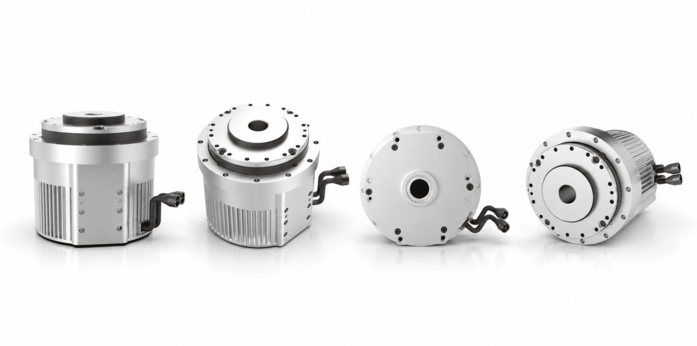
Harmonic joint modules provide integrated actuation solutions for humanoid robot lower limbs. By combining motor drive, harmonic transmission, and position feedback in a compact assembly, these modules help meet the requirements for controlled torque output, precise joint positioning, and compact mechanical integration.
For humanoid robot developers, selecting and integrating suitable joint modules is an important part of building a stable lower limb motion system.
1. Where Are Harmonic Joint Modules Used in Humanoid Robot Lower Limbs?
The lower limb structure of a humanoid robot typically includes hip, knee, and ankle joints. Each joint performs a different function during walking, and their coordinated movement determines the robot's overall gait performance.
| Robot Joint | Application Scenario | Main Motion Requirements |
|---|---|---|
| Hip Joints | Leg movement, walking, standing, and changing direction | High torque, stable load support, coordinated rotation |
| Knee Joints | Leg bending, walking, squatting, and supporting body weight | Controlled acceleration, stable torque output, precise positioning |
| Ankle Joints | Foot positioning, balance adjustment, and ground contact | Accurate positioning, responsive motion control, suitable torque output |
During walking, these three joint positions perform complementary functions:
Hip joints: Drive the legs forward and backward while helping control leg orientation and body posture.
Knee joints: Control leg bending and extension, supporting body movement during different phases of walking.
Ankle joints: Adjust foot orientation and help maintain balance during foot contact and changes in body posture.
These joints must work together according to coordinated motion trajectories. Therefore, different joint positions may require different actuator specifications and configurations.
The suitability of a particular harmonic joint module for each joint position should be evaluated according to its torque capacity, speed range, dimensions, and other technical specifications, as well as the robot's actual mechanical design.
2. How Do Harmonic Joint Modules Support Walking Stability and Motion Control?
2.1 Controlled Torque Output for Lower Limb Movement
During walking, humanoid robot lower limbs experience continuously changing loads. Hip and knee joints must generate sufficient torque to support body movement, while ankle joints need to provide controlled output for foot positioning and posture adjustment.
Harmonic transmission mechanisms provide high reduction ratios, allowing motor output to be converted into higher torque at the joint.
This is particularly relevant to lower limb joints that need to handle changing loads during walking, standing, and squatting.
When selecting harmonic joint modules, engineers should evaluate:
Rated torque and peak torque.
Required output speed.
Acceleration and deceleration.
Actual joint load profiles.
Continuous and short-term operating conditions.
Peak torque should not be treated as a continuous operating rating. The selected module must match the actual torque requirements of each joint.
2.2 Coordinated Joint Movement for Stable Walking
Stable humanoid robot walking depends on the coordinated movement of hip, knee, and ankle joints.
During the walking cycle, the lower limbs alternate between supporting the body and moving the leg forward. Hip joints control leg movement, knee joints coordinate bending and extension, and ankle joints adjust foot orientation to support stable ground contact.
If the movement of one joint is not properly coordinated with the others, the robot may experience unstable steps, excessive posture changes, or inaccurate foot placement.
Integrated joint modules with position feedback allow the robot's control system to monitor individual joint positions and coordinate movement across the lower limbs.
By matching joint motion trajectories with the robot's walking control strategy, the system can support smoother and more coordinated leg movement.
2.3 Accurate Position Feedback for Posture and Balance Control
Accurate joint position feedback is important for controlling humanoid robot posture during walking.
Integrated encoders allow the control system to monitor the position of each joint and support closed-loop motion control.
For example:
Hip joint feedback helps control leg trajectories and coordinate forward and backward movement.
Knee joint feedback supports accurate bending and extension during walking.
Ankle joint feedback helps adjust foot orientation and maintain the required joint position during ground contact.
By processing feedback from multiple lower limb joints, the robot controller can coordinate joint movements according to the required gait pattern.
Encoder configuration, feedback resolution, transmission accuracy, and control-system compatibility should therefore be considered during actuator integration.
2.4 Compact Integration for Lower Limb Structures
Humanoid robot lower limbs have limited installation space and strict weight requirements. Motors, reducers, sensors, bearings, and electrical connections must be accommodated within the mechanical structure of the legs.
An integrated harmonic joint module combines key drive and transmission components into one assembly. This helps reduce the need to design and assemble multiple separate components, simplifying mechanical integration.
A compact actuator structure can help optimize the internal layout of hip, knee, and ankle joints while reducing the complexity of the overall lower limb design.
Engineers should evaluate module dimensions, weight, mounting interfaces, and cable routing requirements before integration.
2.5 Integrated Drive and Control Interfaces
A humanoid robot lower limb system contains multiple actuators that need to communicate with the central control system.
Integrated joint modules can simplify system architecture by combining drive components and feedback interfaces within the actuator assembly.
Depending on the selected model and configuration, communication interfaces such as CAN FD or EtherCAT may be available to support integration with the robot's control network.
Before implementation, engineers should verify:
Supported communication protocols.
Power supply requirements.
Rated and peak current limits.
Available control modes.
Encoder interfaces.
These factors help ensure that the selected joint modules can operate within the robot's overall electrical and motion-control architecture.
3. Key Requirements for Integrating Harmonic Joint Modules into Humanoid Robot Lower Limbs
Although hip, knee, and ankle joints have different movement functions, several common requirements should be considered during lower limb system integration.
| Integration Requirement | What to Consider | Why It Matters |
|---|---|---|
| Torque and Speed | Rated torque, peak torque, output speed | Ensures the actuator matches joint loads and movement requirements |
| Mechanical Dimensions | Outer diameter, length, weight, mounting interface | Ensures the module fits within the lower limb structure |
| Motion Feedback | Encoder type, resolution, positioning accuracy | Supports accurate joint control |
| Electrical Compatibility | Supply voltage, rated current, peak current | Ensures compatibility with the robot's power system |
| Communication | CAN FD, EtherCAT, or other supported protocols | Enables communication with the robot controller |
| Additional Functions | Brake and torque sensor requirements, where applicable | Supports specific holding and force-control requirements |
| Operating Environment | Temperature, dust, moisture, protection rating | Helps ensure reliable operation under actual conditions |
In addition to these parameters, a complete integration assessment should consider mechanical loads, cable routing, heat dissipation, and maintenance accessibility.
The availability of optional functions, protection ratings, and operating temperature ranges may vary by product model and configuration. Engineers should confirm the relevant technical specifications before finalizing the actuator selection.
Heat dissipation should also be evaluated according to the actual operating conditions, including continuous torque, duty cycle, installation space, and surrounding thermal environment.
4. HISCIENCE Harmonic Joint Modules for Humanoid Robot Lower Limbs
HISCIENCE provides integrated harmonic joint modules for robotic applications, including humanoid robot joint designs.
The product series includes HS-HA14, HS-HA17, HS-HA20, HS-HA25, and HS-HA32, offering different torque capacities and mechanical dimensions for different joint requirements.
Depending on the specific model and configuration, the product series may provide the following features and options:
Integrated motor drive and harmonic transmission.
Encoder position feedback.
Different torque and size specifications.
Communication interfaces, depending on the selected model.
Optional brake configurations, where available.
Torque sensing configurations, where supported by the selected model.
For humanoid robot lower limb applications, engineers can evaluate different module specifications according to the torque, speed, installation space, and motion-control requirements of hip, knee, and ankle joints.
The suitability of individual models for specific joint positions should be determined through technical evaluation of their specifications and the robot's application requirements. Optional functions and environmental specifications should also be confirmed for the selected configuration.
HISCIENCE also provides harmonic and planetary joint module solutions for humanoid robots, quadruped robots, and collaborative robots.
Explore the HISCIENCE Robot Joint Module Product Range to learn more about available models and technical specifications:
HISCIENCE Joint Module: https://www.hisciences.com/products-26/
5. What Information Should You Prepare for a Humanoid Robot Lower Limb Project?
To evaluate suitable harmonic joint modules for humanoid robot lower limbs, engineers should prepare the following information:
Application: Robot type and joint position, such as hip, knee, or ankle.
Load Requirements: Robot weight, leg structure, and expected joint loads.
Motion Requirements: Required output torque, speed, acceleration, and movement frequency.
Mechanical Requirements: Available installation space, mounting dimensions, and cable routing.
Electrical Requirements: Supply voltage and current limits.
Control Requirements: Communication protocol, encoder feedback, and control modes.
Additional Functions: Brake, torque sensor, and environmental protection requirements, if applicable.
Mechanical drawings, preliminary load calculations, and expected walking motion profiles can also help suppliers evaluate the application more accurately.
Providing separate technical requirements for hip, knee, and ankle joints can help improve the accuracy of actuator selection and system integration.
6. Develop Your Humanoid Robot Lower Limb Solution with HISCIENCE
Walking stability and motion control are important considerations in humanoid robot development. The coordinated operation of hip, knee, and ankle joints requires suitable torque output, accurate position feedback, and compatible control interfaces.
Harmonic joint modules provide an integrated actuator solution that helps simplify lower limb mechanical design while supporting precise and coordinated joint movement.
HISCIENCE offers harmonic and planetary joint module solutions for robotic applications. Our team can assist with product evaluation and technical communication based on your joint requirements and integration conditions.
If you are developing a humanoid robot or optimizing an existing lower limb actuator system, contact HISCIENCE to discuss your project requirements.
Contact HISCIENCE
Website: https://www.hisciences.com/
Tel: +86-13543318795
Email: sales@hisciences.com
WhatsApp: +8613543318795
WeChat: 13543318795
Address: 3rd Floor, Building 1, Hengchangrong High-tech Industrial Park, No.128 Shangnan East Road, Shajing Subdistrict, Bao'an District, Shenzhen City, China.
 Back to list