
 CN
 sales@hisciences.com


The required output torque for a humanoid robot ankle joint depends on foot-ground interaction, leg structure, robot weight, movement speed, and acceleration.
Engineers should consider the external forces acting on the foot, the distance between the force application point and the ankle joint axis, and the dynamic effects of leg movement.
For a preliminary estimate, the torque generated by a force can be calculated by multiplying the force by its perpendicular distance from the ankle joint axis:
Torque = Force × Perpendicular Distance
During dynamic movements, additional torque may be required to overcome gravity, friction, and rotational inertia, as well as to accelerate or decelerate the foot and lower leg.
Both continuous and peak torque requirements should be evaluated. The selected joint module should provide sufficient rated torque for normal operation and adequate peak torque for short-term dynamic loads. A more accurate calculation should consider the robot's mechanical structure, motion profile, and ground reaction forces.
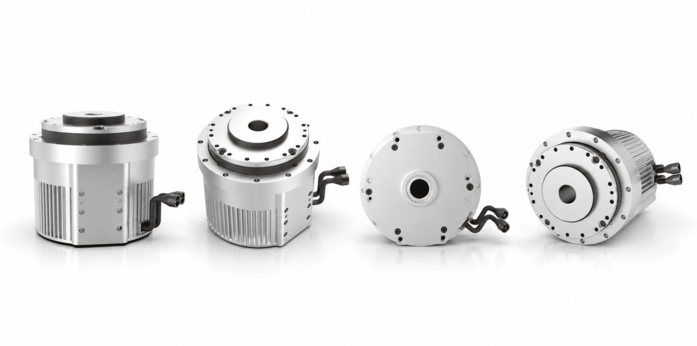
Related Product: HISCIENCE Joint Modules
 Back to list